
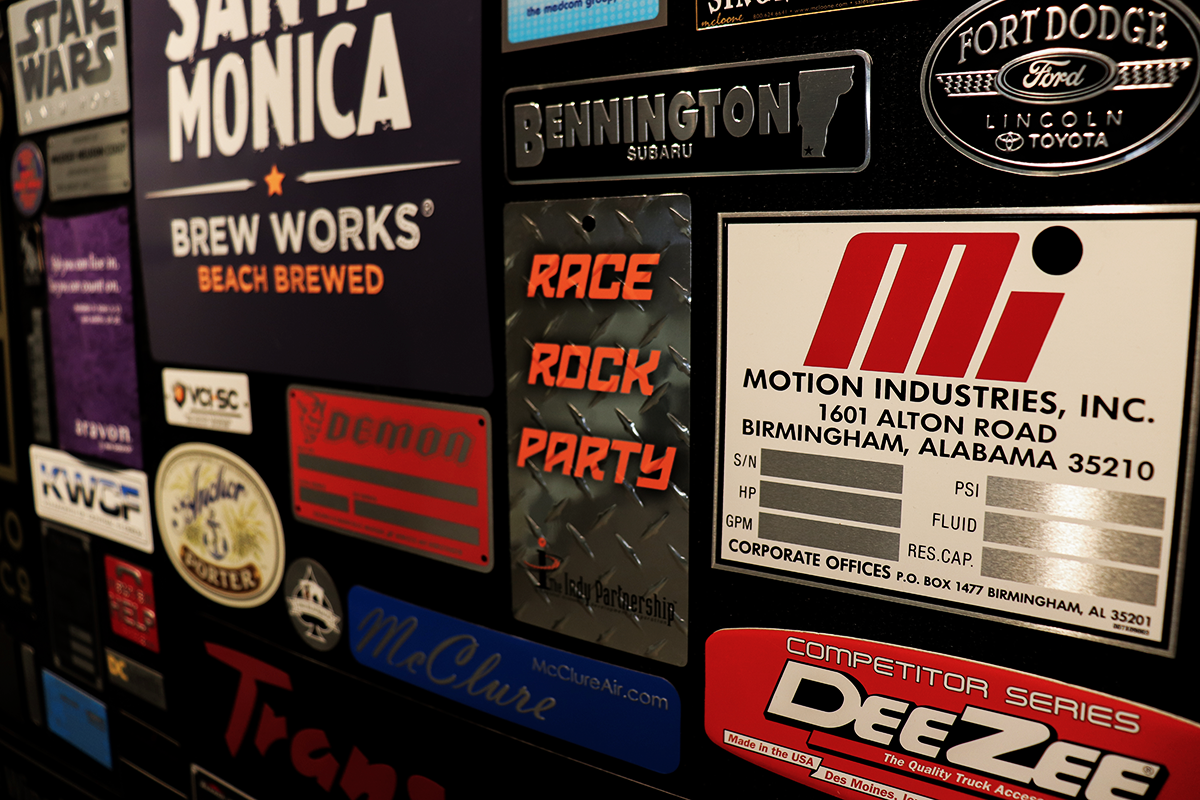
Product identification doesn't exist in a vacuum. A nameplate or label may look the same in a drawing or a design file, but how it performs depends entirely on where and how it's used. That's why application-driven design is critical for long-lasting product identification.
When identification is designed around the real application, and not just the product, it performs better over the life of the equipment.
What is Application-Driven Design?
Application-driven design means starting with the environment and use first, then selecting materials, printing and attachment methods that fit those conditions.
Instead of asking, "what label do we usually use?" the better question is: "what will this part be exposed to over the next 10, 20, 30 years?".
That shift in thinking is what prevents premature failure!
Why One-Size-Fits-All Identification Falls Short
Industrial equipment rarely lives in "ideal" conditions. Product identification may be exposed to:
-
Heat and extreme temperatures
- Chemicals and solvents
- Abrasions and repeated handling
- UV exposure and weather
- Washdowns and moisture
- Vibrations and movements
Using a standard "solution" without considering these factors often leads to fading, peeling, corrosion, or unreadable information.
Click here to read our blog, Designing Product Identification for Real-World Use, Not Just the Drawing Board
How Application Drives Design Decisions
When identification is designed with the application in mind, every decision becomes intentional.
Material Selection
Metal nameplates may be required for high heat, chemicals, or long lifecycles, while other environments may allow alternative materials.
For more information on materials and substrates, you can download our free ebook here.
Attachment Methods
Adhesives, fasteners, or a combination of the two must be chosen based on vibration, surface conditions, and exposure, not convenience.
Looking for more information on attachment methods? Click here to download our ebook, Nameplates with Staying Power.
Finish and Legibility
Contrast, embossing, and coatings all impact how readable identification remains over time.
If you'd like more information on embossing your product identification, click here.
Placement
Where identification is located affects wear, accessibility during service, and long-term usability.
The Long-Term Impact of Application-Driven Design
When product identification is designed specifically for its environment:
-
Information stays readable
-
Compliance risks are reduced
-
Service and maintenance are easier
-
Equipment retains its value and usability
These benefits aren't always visible on day one, but they matter years later, when equipment is still in service and information is still needed.
Designing for the Life of the Equipment
Application-driven design means recognizing that product identification is part of the system, not just an accessory. It's meant to last as long as the equipment itself and perform reliably under real-world conditions.
By starting with the application, manufacturers can avoid common failures and ensure their product identification supports safety, compliance, and serviceability for the long haul.
Frequently Asked Questions
What is application-driven design in product identification?
Application-driven design means designing nameplates and labels based on how and where they will be used, not just how they look. Materials, attachment methods, finishes, and placement are all selected to match the equipment's environment and expected lifespan.
Why does product identification fail when application isn't considered?
When environmental factors like heat, chemicals, abrasion, vibrations, or washdowns aren't accounted for, product identification can fade, peel, corrode, or become unreadable, often long before the equipment or product reaches the end of its life.
How do you choose the right material for industrial product identification?
The right material depends on the application. Factors such as temperature, chemical exposure, abrasion, and required longevity determine whether metal nameplates or other materials are appropriate.
Why is attachment method as important as material selection?
Even the most durable materials can fail if they're attached incorrectly. Adhesives, fasteners, or a combination of the two must be chosen based on vibration, surface conditions, and environmental exposure ensure long-term performance.
When should production identification be considered in the design process?
Product identification should be considered early in the design process. Treating it as an afterthought increases the risk of failure, poor placement, and reduced readability in the field.